

What is Goth?
So, what exactly is goth? The subculture of goth grew from a love of the dark, the mysterious, and the romantic. Inspired by rich literature, haunting architecture, expressive music, and striking fashion, it became more than a style—it became an identity. Goth has made an undeniable impact on global culture, influencing not only streetwear and runways but also film, music, and even lifestyle trends. It celebrates individuality and creativity, much like the haunting beauty found in gothic jail architecture or the timeless aura of modern gothic decor.
Different Influences in Goth Subculture
The goth subculture thrives on an appreciation for darkness and mystery. Influences range from Medieval and Victorian romanticism to gothic literature and music. While the movement truly blossomed in the 1980s with bands like Bauhaus, Joy Division, and Siouxsie and the Banshees, its deeper roots can be traced back to the gothic midwest of architecture and art from the 12th to 16th centuries. Think of the Gothic Quarter in Barcelona or Leipzig, the city that hosts Wave Gotik Treffen, the world’s largest gothic festival.
Image: ‘Chemical Sweet Kid’ band performing in gothic style clothing at Wave Gotik Treffen.
Ideology
Defining the goth ideology is challenging, as it is largely shaped by the individuality of its followers. It draws from Romanticism and Neo-Romanticism, where theatrical self-expression is embraced. From pale skin and dark lips to dramatic fashion, the goth aesthetic is unapologetically bold.
Unlike other subcultures such as hippies or punks, goth has never been overtly political. Instead, it thrives on creativity, tolerance, and the celebration of diversity. Some goths lean toward intellectualism or alternative philosophies, while others simply embrace it as a personal expression.
What is Goth Fashion?
Goth fashion took its most recognizable form in the 1980s, blending rebellious punk elements with romantic Victorian influences. Pale makeup, corsets, lace gowns, leather jackets, and bold accessories became signatures of the style. From the punk scene came heavy eyeliner, spiked chokers, and studded belts, while Victorian beauty contributed elegance and refinement. This unique fusion birthed a look that continues to inspire.
Goth Origin – Where it Started and Who Defined the Style
The term “goth” first emerged in the 1960s to describe a music genre. By the 70s and 80s, bands like The Damned, Siouxsie and the Banshees, and Bauhaus pushed goth into the spotlight. At the same time, cinema fueled the aesthetic—films like Nosferatu (1979) and Eraserhead (1977) deepened the dark inspiration behind goth fashion.
Image: Mademoiselle Tineoidea styled in gothic outfit with corset belt and layered pants.
Goth 1980’s Fashion
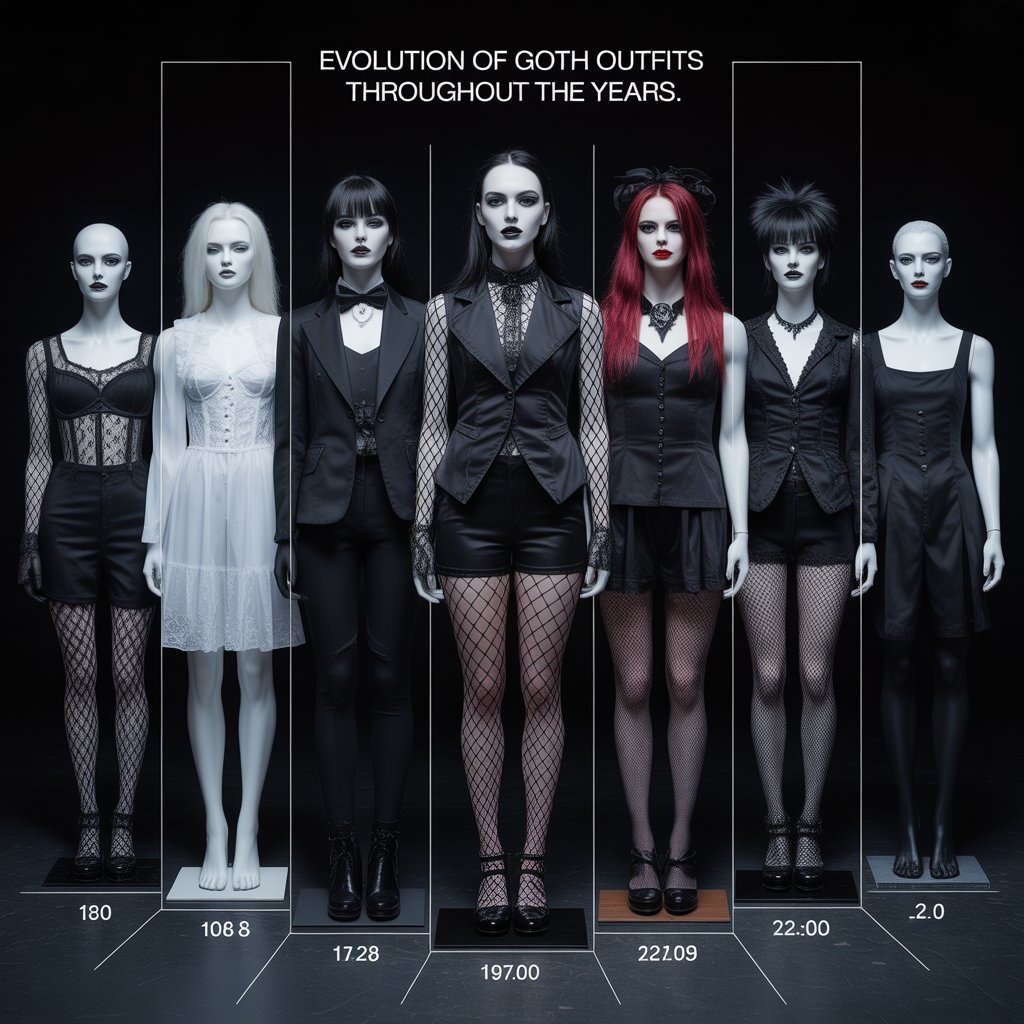
The 80s defined goth fashion with dramatic eyeliner, mourning dresses, fishnets, and velvet cloaks. Siouxsie Sioux’s striking look of black clothing, bold cat-eyes, and deep lipstick made her a fashion icon for an entire generation.
Goth 1990’s Fashion
In the 90s, goths mixed mini-skirts, skinny jeans, and leather jackets. Punk influence remained strong, giving the style a grittier and more rebellious vibe. Many mainstream artists and celebrities began adopting elements of this look.
Goth 2000’s Fashion
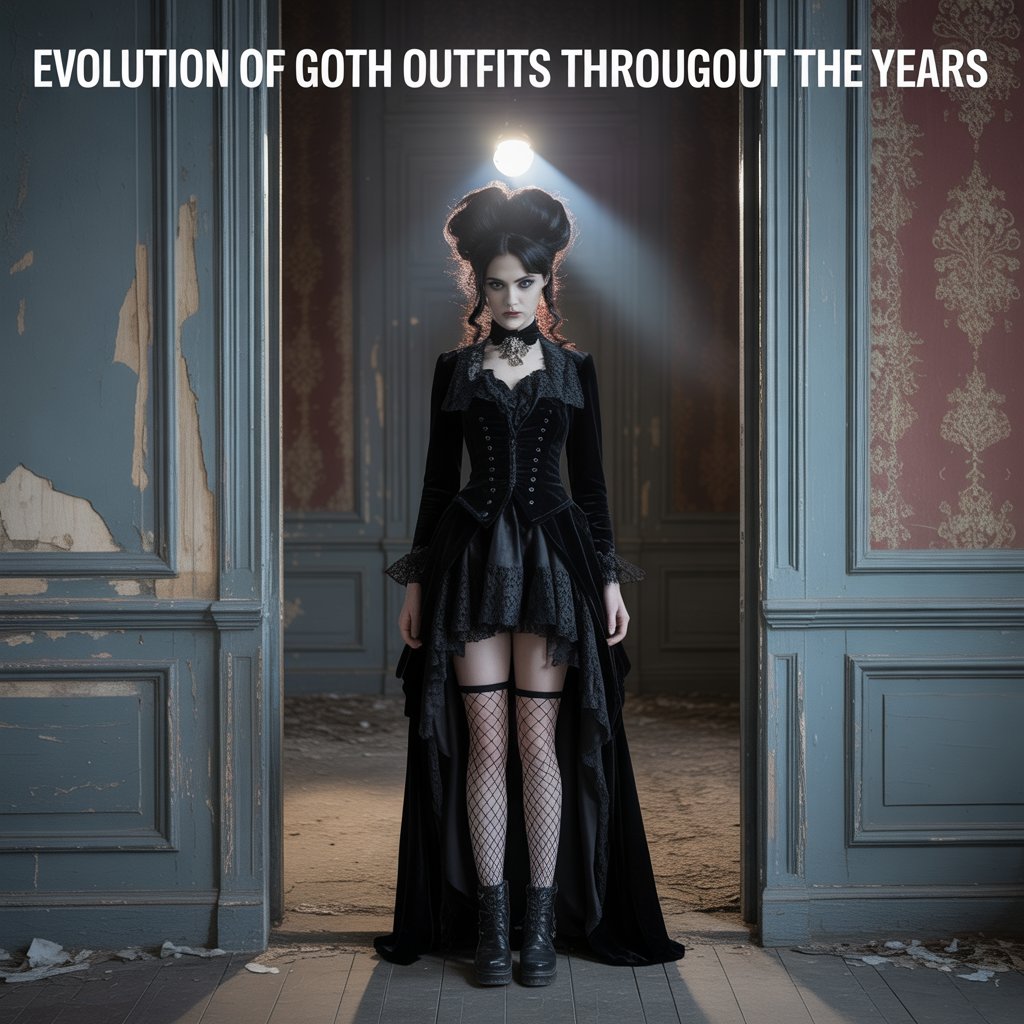
The 2000s saw goth fashion experiment with red and black eyeshadows, thin brows, dual-toned hair, and dreadlocks. Cut-out gloves and edgy accessories became staples, while goth models gained mainstream recognition.
Goth Fashion in Present Day
Today, goth fashion is more visible than ever. Designers like Rick Owens, Sacai, and Yohji Yamamoto have embraced it on the runway. Brands like Noir Kei Ninomiya highlight the avant-garde, while spikes, plaid, chains, and layered textures dominate street style. Just like modern gothic decor, goth fashion has proven timeless, continually reinventing itself.
Different Types of Goth Fashion
Goth style has expanded into many subcategories, each offering a unique twist:
- Traditional Goth: Inspired by 80s music icons, marked by leather jackets, big boots, fishnets, and dramatic makeup.
- Romantic Goth: Heavily Victorian-inspired with lace, poetry, and splashes of red among the black.
- Pastel Goth: A blend of soft colors with classic dark gothic elements, often overlapping with Kawaii fashion.
- Hippie Goth: Flowing dresses, pagan symbols, and influences from spirituality and nature.
- Vampire Goth: Inspired by films like Nosferatu and Dracula, with pointed nails, pale makeup, and blood-red accents.
- Cyber Goth: Neon colors, chains, steampunk vibes, and futuristic accessories.
- Bubble Goth: A newer style created by Kerli Koiv, blending light and dark aesthetics in playful ways.
- Tribal Goth: A fusion with belly dance and tribal fashion elements.
- Casual Goth: A modern, flexible style that uses dark tones while embracing everyday comfort.
Image: Tristania gothic band styled in Psylo fashion, showcasing dark and edgy aesthetics.
Psylo Goth Inspired Outfits
If you’re inspired by the styles above and want to add gothic pieces to your wardrobe, explore collections that range from streetwear to statement looks. From corsets and hoodies to unique accessories, there’s something for everyone drawn to the world of goth.
Image: Ryo Love wearing a gothic hooded crop jacket.
Conclusion
Goth fashion has transformed across decades, yet it remains a lifestyle that celebrates individuality, creativity, and diversity. Just as gothic jail structures and gothic cathedral windows endure as symbols of strength and beauty, goth style continues to thrive in new, innovative forms.
The goth movement isn’t just about clothing—it’s a culture, an identity, and a way of seeing the world. With its ever-evolving presence, the story of goth is far from over. Share your thoughts, stories, and style tips, and become part of this timeless legacy.


