

Step into a world where shadow meets style — welcome to the story behind every corset, lace glove, and midnight hue. At GothicOutfit, we don’t just sell clothes — we celebrate identity. Whether you’re drawn to trad goth, romantic goth, or industrial goth, the roots of the gothoutfit you wear today echo centuries of cultural symbolism, musical rebellion, and self-expression. Ready to go deeper? Let’s unravel the evolution of goth type through time.
1. The Victorian Mourning Legacy: Where Dark Began
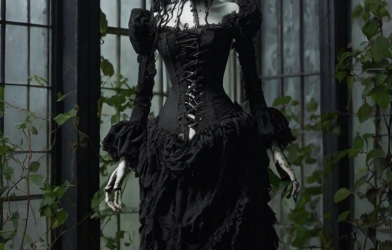
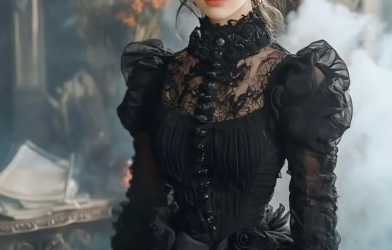
Long before black lipstick and platform boots, the Victorian age laid the groundwork for what we now call gothic fashion. In an era obsessed with ritual and formality, death and mourning became woven into everyday style. When Queen Victoria mourned Prince Albert in jet-black gowns for the rest of her life, the upper classes followed suit — dark dresses, veils, crepe fabrics, and strict mourning protocols spread across high society.
This emphasis on formality, layered textures, deep blacks, and symbolic accessories would echo forward into the gothoutfit aesthetics centuries later. The silent power of mourning attire quietly became a wellspring for different types of goths to draw upon.
2. From Glam & Punk to the Birth of Goth
By the 1970s and early 1980s, music and style collided in underground clubs and back alleys across the UK. Glam rock’s theatrical costumes and makeup gave way to punk’s raw energy and defiance. Out of that musical ferment emerged the first hints of what would become gothic culture.
Legend has it that Bauhaus’s track “Bela Lugosi’s Dead” (1979) marked a turning point — an entire generation heard it and recognized a new mood, a new identity. From there, figures like Peter Murphy (of Bauhaus) and Robert Smith (of The Cure) became unofficial architects of dark fashion, blending dramatic silhouettes with androgyny, makeup, and emotional depth.
Yet goth was never born in a vacuum. Influences from Siouxsie Sioux, David Bowie’s glam fluidity, Patti Smith’s raw edge, and Joy Division’s melancholic minimalism all poured into the melting pot of early goth style. These artists helped shape the visual vocabulary of gothoutfit culture.
3. Pre-Goth Pioneers: The Early Dark Icons
Before the subculture fully formed, a few bold figures already walked the shadowed path — and their images still resonate in modern gothoutfit design:
- Theda Bara
Considered one of the earliest “gothic” movie icons, Bara’s dark eye makeup, dramatic gowns, and mysterious aura challenged 1920s norms. She embraced theatrical presentation, mystery, and the occult, planting seeds for later goth visual language. - Vampira (Maila Nurmi)
In the mid-1950s, Nurmi created Vampira — a character built on gothic fantasy. Her long black dresses, cinched waists, stark makeup, and otherworldly presence offered a template for what goth could feel like, not just how it looked.
These creators didn’t wear a brand name or follow a trend — they embodied spirit, drama, and the macabre in style. And centuries later, their echoes appear in the dramatic lace, corsets, and theatrical cuts you’ll find on GothicOutfit.com.
4. The Emergence of Goth Types: Ways to Wear Darkness
Over time, gothic fashion fractured into distinct goth types — each with its own visual focus, attitude, and favorite pieces. Here are a few of the most prominent:
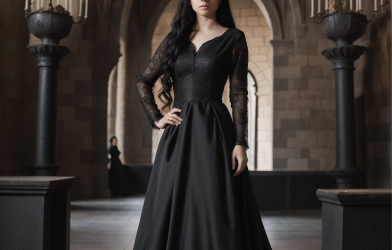
- Trad / Traditional Goth — Think Victorian touches, deep blacks, lace, band tees, and an overall elegance rooted in the early 1980s post-punk era.
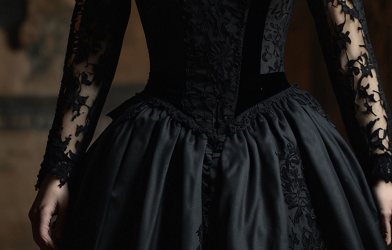
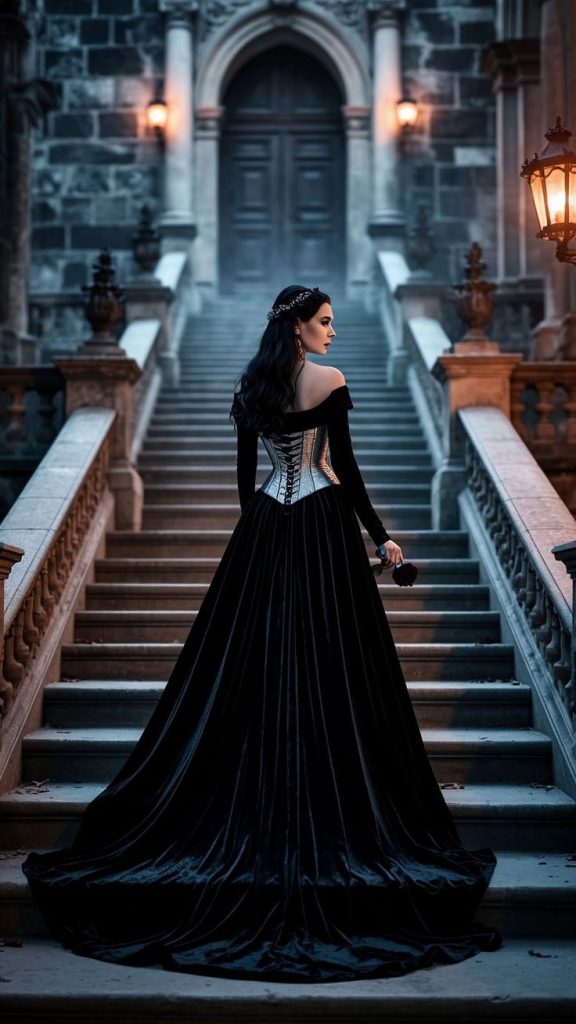
- Romantic / Victorian Goth — More ornate: velvet gowns, flowing skirts, ruffles, corsetry — a gothic fantasy of old-world elegance.
- Industrial / Cybergoth — A harsher, futuristic edge: PVC, neon accents, synthetic fabrics, straps, and tech-inspired embellishments.
- Deathrock / Horror Goth — Inspired by punk and horror films: studs, safety pins, ripped fabrics, dramatic makeup.
- Nu-Goth / Minimal Goth — A modern, stripped-down goth: solid blacks, minimal hardware, clean silhouettes — perfect for blending dark style into everyday wear.
Each different type of goth brings its own flavor to the gothoutfit you create, making your expression uniquely yours.
5. Iconic Figures Who Shaped Modern Goth Style
From stage to street, modern icons helped push goth fashion further:
- Amy Lee (Evanescence)
Called “the queen of goth girl style” by Vogue, she’s known for DIY elegance — custom gowns, dramatic makeup, and fusing metal aesthetic with romantic darkness. - Ellie Rowsell (Wolf Alice)
A blend of grunge, indie, and goth sensibilities — from slip dresses and chunky boots to bold suits and flowing silhouettes, she demonstrates how a gothoutfit can evolve with confidence. - Dita Von Teese
With her vintage-inspired glamour and obsession with silhouette, Dita’s aesthetic bridges burlesque and gothic femininity — corsets, lace, and perfect dark drama.
These figures help show that goth fashion isn’t static — it’s alive, evolving, and personal.
6. Why GothicOutfit Is Your Dark Fashion Destination
At GothicOutfit.com, we embrace every shade of darkness. Whether you lean trad goth, romantic goth, nu-goth, or experiment across goth types, our collection offers curated pieces to make your statement. From lace dresses and chiffon skirts to harnesses, chokers, and layered accessories — our inventory helps translate your inner gothic identity into wearable art.
We believe your gothoutfit is not just clothes — it’s your voice, your armor, your canvas.
7. Best Imagery Ideas for Your Gothic History Blog
To complement your article, here are image suggestions to create mood and support content:
- A Victorian mourning portrait (black dresses, veils)
- Early 1980s goth bands / concert photography (Bauhaus, Siouxsie, The Cure)
- Portraits of Theda Bara or Vampira in their iconic looks
- Modern gothic fashion editorial shot (e.g., corset, lace, moody lighting)
These visuals will help your readers see the evolution you’re describing.
FAQs
Q: What is a “gothoutfit”?
A: A gothoutfit is any clothing ensemble inspired by gothic aesthetics — dark colors, dramatic silhouettes, lace, hardware, and mood.
Q: How many goth types are there?
A: There’s no fixed number — but common ones include trad, romantic, industrial, deathrock, nu-goth, and hybrid mixes.
Q: Can I mix styles?
A: Absolutely! Many goths blend different types of goths together — e.g. romantic + industrial — to create their unique goth type.
Q: Do you ship worldwide?
A: Yes — GothicOutfit.com ships globally so gothic lovers everywhere can wear darkness.
Q: How do I choose my first gothoutfit?
A: Start with basics: black jeans or skirts, a statement top, accessories (chains, chokers), then layer from there.